Christian Dior and the Reconfiguration of Postwar Fashion
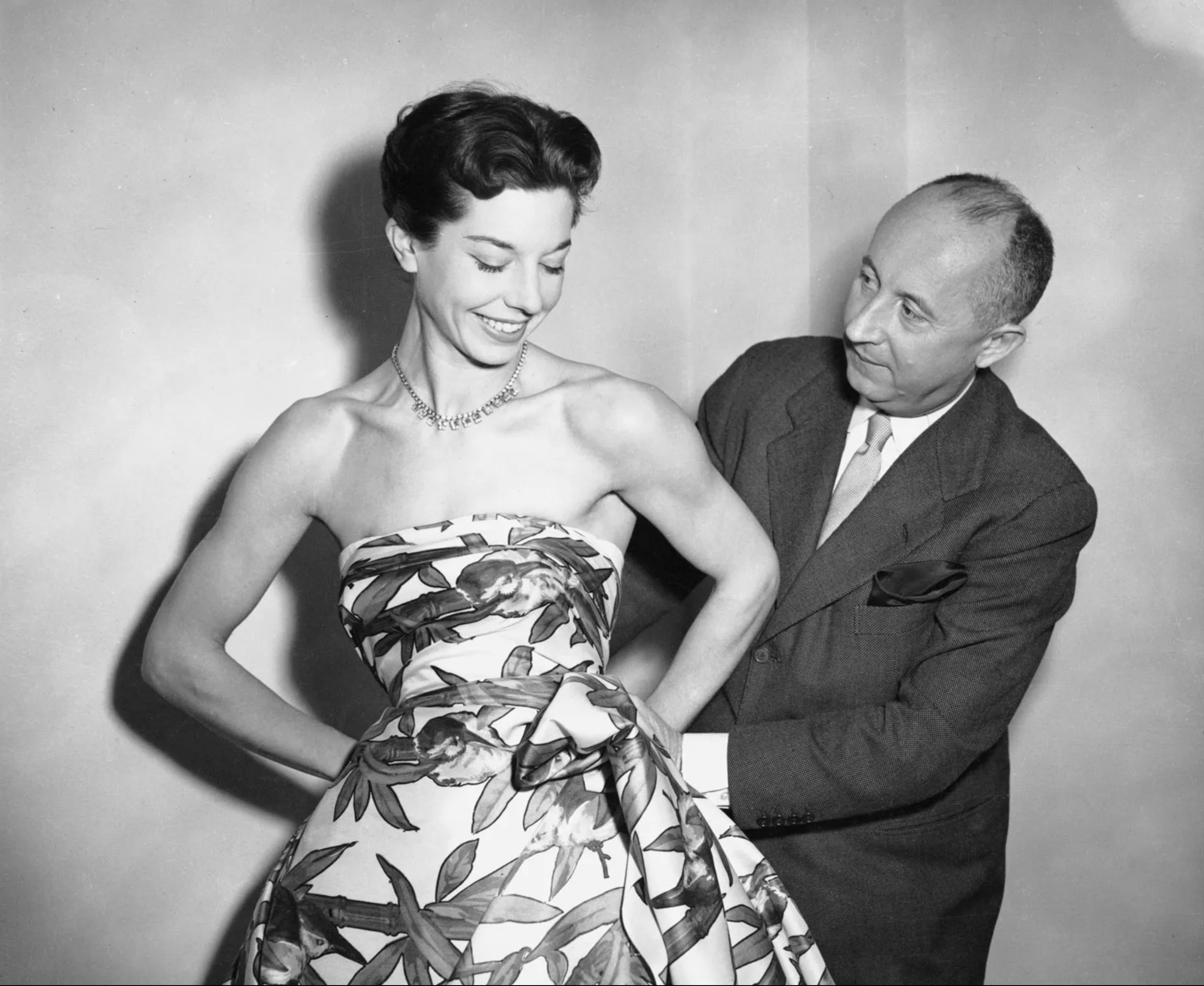
Christian Dior occupies a central position in the historiography of twentieth-century fashion, not merely as a designer of garments but as a cultural agent who redefined aesthetic values in the aftermath of World War II. His work represents a critical moment in which fashion transitioned from wartime utility to renewed expressions of luxury, femininity, and symbolic reconstruction.
Born in 1905 in Granville, Normandy, Dior’s early engagement with the arts significantly shaped his later design philosophy. Before entering the fashion industry, he operated an art gallery in Paris, where he was exposed to modern artistic movements and compositional principles. This background is evident in his meticulous attention to line, proportion, and structure, elements that would become hallmarks of his couture collections.
Dior’s inaugural collection in 1947 marked a decisive rupture with prevailing sartorial norms. Emerging from a period defined by material scarcity and functional austerity, his designs introduced a radically different silhouette characterized by accentuated waists, voluminous skirts, and soft, rounded shoulders. This aesthetic, later termed the “New Look,” was not merely a stylistic innovation but a cultural statement that reasserted ideals of femininity and opulence. It has been widely interpreted by scholars as both a reaction against wartime deprivation and a reflection of broader socio-economic recovery in postwar Europe.
The significance of Dior’s work lies not only in its formal qualities but also in its ideological implications. His designs can be understood as participating in the reconstruction of gender identity during a period of social transition. By emphasizing elegance and decorative excess, Dior reintroduced fashion as a domain of aspiration and emotional resonance. In this sense, his couture functioned as a symbolic counterpoint to the utilitarian ethos of the preceding decade.
Throughout the 1950s, Dior continued to refine and diversify his design vocabulary, establishing a global fashion enterprise that contributed to the institutionalization of haute couture. His influence extended beyond individual collections, shaping the operational and creative frameworks of modern luxury fashion houses.
Following his death in 1957, the continuity of his vision was maintained through successive creative directors, each negotiating the tension between heritage and innovation. Today, the House of Dior remains a paradigmatic example of enduring brand identity within the fashion industry.
In sum, Christian Dior’s legacy can be understood as both aesthetic and cultural. His work not only transformed the visual language of fashion but also articulated a broader narrative of renewal, positioning couture as a vital expression of postwar modernity.