Jorge Luis Borges: The Man Who Turned Literature into an Infinite Labyrinth
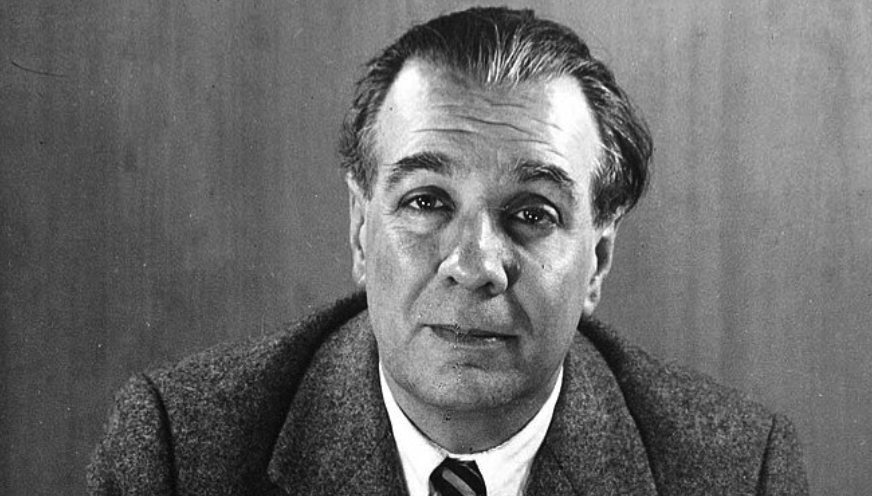
Jorge Luis Borges (1899–1986) was one of the most influential writers of the twentieth century. An Argentine poet, essayist and short-story writer, he transformed literature into a universe of philosophical questions, mysterious labyrinths, imaginary libraries and infinite possibilities. Although he never received the Nobel Prize in Literature, his work profoundly influenced generations of writers, philosophers and intellectuals around the world.
Born on 24 August 1899 in Buenos Aires, Argentina, Borges grew up in an educated family surrounded by books. His father, a lawyer and psychology teacher, had an extensive personal library, which became an important part of the young Borges's childhood. He learned to read in both Spanish and English and developed an early fascination with literature, philosophy and foreign cultures.
In 1914, his family moved to Europe, eventually settling in Geneva, Switzerland, where Borges continued his education. During these years, he became familiar with European literary movements, particularly Symbolism and Expressionism. After returning to Argentina in 1921, he became involved in the country's literary scene and helped introduce avant-garde ideas into Argentine literature.
His early publications were mainly poetry and essays, but it was through his short stories that Borges achieved international recognition. Works such as The Garden of Forking Paths (1941), Ficciones (1944) and The Aleph (1949) established his reputation as an extraordinary literary innovator.
Borges's stories often explore complicated philosophical ideas through seemingly simple narratives. He was fascinated by time, memory, identity, infinity and the relationship between reality and imagination. His fictional worlds frequently contain imaginary books, mysterious encyclopaedias, infinite libraries and labyrinths that represent the complexity of human existence.
One of his most famous stories, The Library of Babel, describes a universe consisting of an enormous library containing every possible combination of letters. Somewhere among its countless books lies the explanation of everything, although finding it seems practically impossible. The story is both a fascinating literary experiment and a reflection on humanity's endless search for knowledge and meaning.
Another remarkable work, The Aleph, revolves around a mysterious point in space from which it is possible to observe every other point in the universe simultaneously. Through this extraordinary concept, Borges explores the limitations of human perception and the impossibility of fully understanding reality.
An important turning point in his personal life came in 1955, when he became almost completely blind, partly because of a hereditary eye condition. Ironically, he had just been appointed director of Argentina's National Library. Despite losing his eyesight, Borges continued writing, dictating his stories and poems to others.
His influence extended far beyond Argentina. Writers such as Gabriel García Márquez, Umberto Eco and Italo Calvino acknowledged the importance of his literary imagination and philosophical approach. His work also anticipated many ideas associated with postmodern literature.
Jorge Luis Borges died in Geneva on 14 June 1986, leaving behind a remarkable literary legacy. His stories continue to challenge readers, inviting them to question what is real, what is imagined and whether the universe itself might be an endless labyrinth.
Perhaps Borges's greatest achievement was showing us that literature does not simply describe the world. It can create entirely new universes, each one as mysterious and infinite as the human imagination.