Salvador Allende: The Fall of Chile's Democratic Socialist Experiment
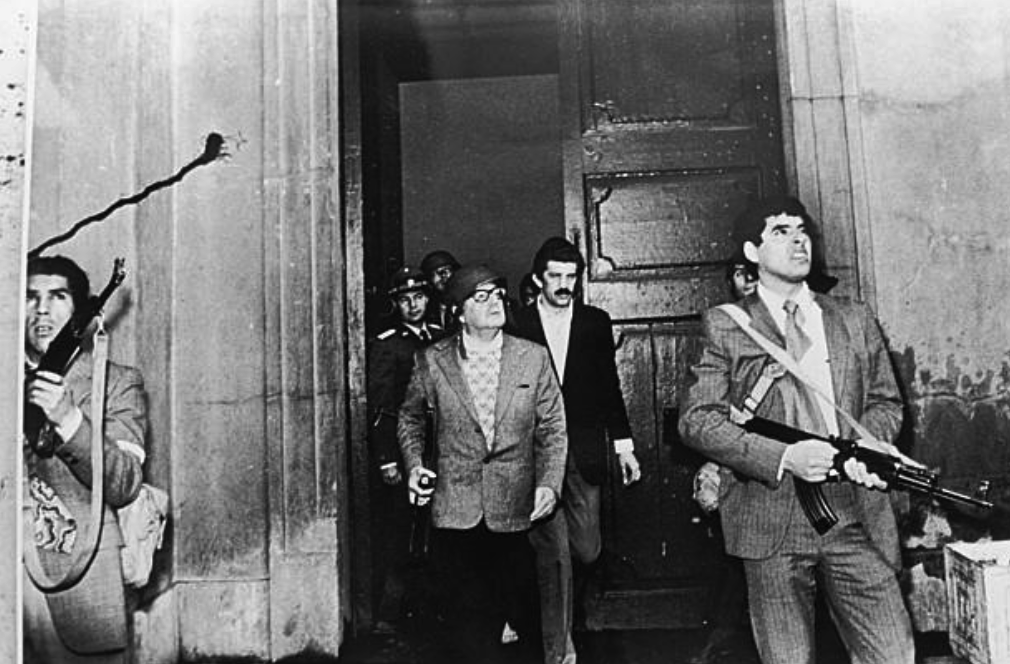
On 11 September 1973, Chile experienced one of the most dramatic and violent political upheavals in its modern history. A military coup brought an abrupt end to the government of President Salvador Allende, destroying his ambitious attempt to introduce socialism through democratic means. The bombing of the presidential palace, La Moneda, and Allende's death became defining symbols of the tragedy, not only for Chile but for the wider international left.
Allende had been elected president in 1970, becoming the first Marxist leader in Latin America to reach power through democratic elections. His vision was to transform Chile into a socialist society without abandoning constitutional democracy. He believed that economic inequality could be reduced through nationalisation, land reform and greater government control over industry.
His government nationalised the country's copper mines, banks, steel, electricity and telephone industries. Large estates were redistributed, and workers were given greater influence over industrial production. These policies were particularly popular among the working classes and the poor, who viewed Allende as a leader genuinely committed to improving their lives.
However, his government faced enormous opposition. The middle and upper classes feared the expansion of socialism, while opposition parties controlled Congress and resisted many of his reforms. Inflation, shortages of food and other essential goods, and economic instability increasingly affected ordinary Chileans. Strikes by truck drivers, copper miners, doctors and shopkeepers paralysed the country, deepening political divisions.
The situation became increasingly dangerous. Allende had won only 36.3% of the vote in the 1970 election, yet he governed as though he possessed a strong national mandate. His opponents accused him of pushing Chile towards dictatorship, while his supporters believed that the country's traditional economic elites were sabotaging the socialist project.
The military, traditionally regarded as politically neutral, gradually became involved in the crisis. Allende made the mistake of bringing military commanders into his government, hoping they could restore stability. Instead, political divisions within the armed forces intensified, paving the way for a coup.
On the morning of 11 September, troops surrounded La Moneda. General Augusto Pinochet and other military commanders demanded that Allende surrender, offering him safe passage out of the country. He refused, insisting that he would not abandon the presidency. Air force planes attacked the palace with bombs and rockets, while soldiers and tanks advanced through the streets of Santiago.
Allende remained inside with a small group of loyal supporters. During the final assault, he reportedly ordered those accompanying him to surrender, declaring that he would be the last to leave. According to the military account, he committed suicide. His supporters, however, questioned the circumstances of his death, and rumours of murder contributed to his transformation into a political martyr.
The military junta quickly established control. Pinochet became its leading figure, political parties were suppressed, airports and borders were closed, and a strict curfew was imposed. Reports of executions, arrests and brutal treatment of political opponents spread throughout the country. Chile's democratic institutions were effectively dismantled.
International reactions were intense. Left-wing movements across Europe and Latin America condemned the coup, while many suspected American involvement. Washington had opposed Allende, particularly after the nationalisation of American-owned industries, and had applied economic pressure against his government. Although the United States denied direct involvement in the coup, its relationship with Chile's military and its previous hostility towards Allende fuelled widespread suspicion.
Allende's downfall exposed the fragility of democratic socialism in a deeply divided society. His economic policies, political mistakes and inability to overcome opposition contributed to his defeat, but the violent military overthrow demonstrated the limits of constitutional politics in an environment of extreme ideological conflict.
Salvador Allende remains a controversial historical figure, remembered by some as a visionary reformer and by others as a failed revolutionary. Yet his death represents something larger than the end of one presidency: it symbolises the destruction of a democratic experiment and the beginning of a dark period of military dictatorship in Chile. His legacy continues to raise an enduring question: can profound social transformation succeed through democratic means when powerful forces are determined to prevent it?