Spain at the FIFA World Cup: From Years of Frustration to Global Champions
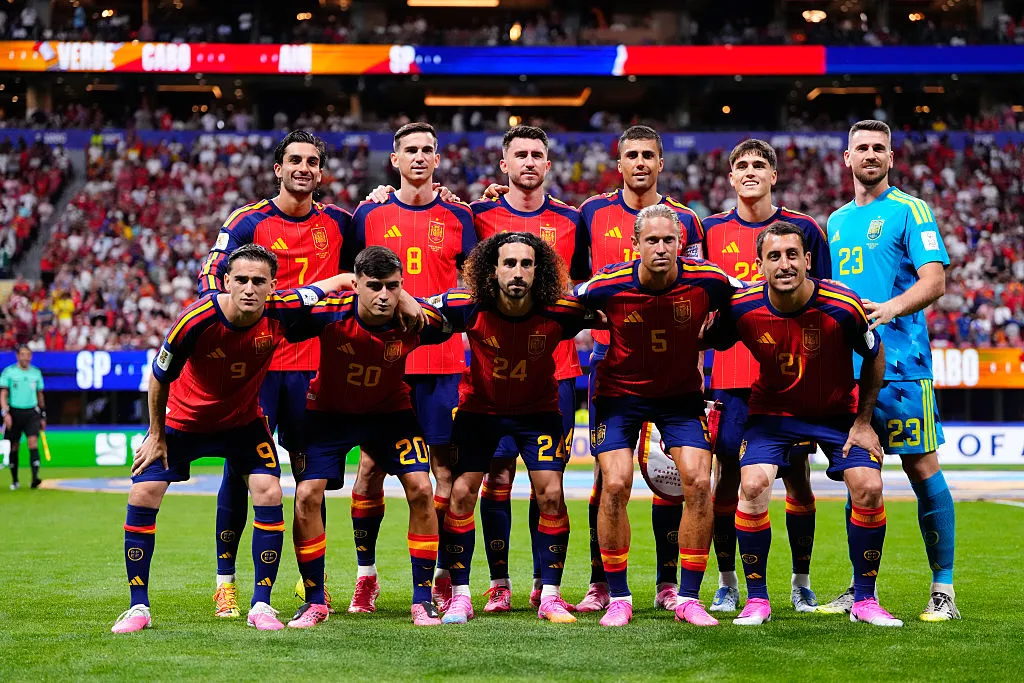
Spain's history in the FIFA World Cup is a fascinating story of perseverance, transformation, and ultimate triumph. Although the country has long been regarded as one of football's traditional powers, success on the world's biggest stage proved elusive for decades. From early promise and heartbreaking disappointments to their unforgettable victory in 2010, Spain's World Cup journey reflects the evolution of one of football's most admired national teams.
Spain made its World Cup debut at the 1934 tournament in Italy. The team impressed in its first appearance, reaching the quarter-finals before being eliminated by the host nation in a fiercely contested replay. Political turmoil soon interrupted Spain's footballing progress, as the Spanish Civil War and the Second World War prevented the country from participating in several editions of the tournament.
Following their return, Spain became regular World Cup participants but struggled to fulfil the high expectations placed upon them. Throughout the 1950s, 1960s, and 1970s, Spain often fielded technically gifted squads but found it difficult to translate their talent into consistent success. Their best performance during this period came in 1950, when the tournament used a final group stage instead of a knockout final. Spain finished fourth after competing against Uruguay, Brazil, and Sweden, a respectable achievement that remained their best World Cup result for many years.
Hosting the FIFA World Cup in 1982 brought renewed optimism. With passionate home support and a talented squad, many believed Spain could challenge for the title. However, the hosts failed to meet expectations and were eliminated in the second group stage. Similar disappointments followed in subsequent tournaments, with Spain frequently reaching the knockout rounds only to suffer painful exits, often in penalty shootouts or narrow defeats.
Despite these setbacks, Spanish football continued to develop. The country's emphasis on youth development, technical excellence, and possession-based football gradually transformed both club and international success. Clubs such as FC Barcelona and Real Madrid became global giants, producing generations of exceptional players who would eventually redefine Spain's national team.
The golden era arrived between 2008 and 2012. After winning the UEFA European Championship in 2008, Spain entered the 2010 FIFA World Cup in South Africa as one of the tournament favourites. Ironically, their campaign began with a surprising 1-0 defeat to Switzerland. Rather than losing confidence, Spain responded with remarkable composure, winning every remaining match on their path to the final.
Led by manager Vicente del Bosque and inspired by stars including Iker Casillas, Xavi Hernández, Andrés Iniesta, David Villa, Xabi Alonso, Sergio Ramos, and Carles Puyol, Spain showcased their famous tiki-taka style of play. Built on precise passing, intelligent movement, and patient possession, the system frustrated opponents while allowing Spain to control matches with remarkable consistency.
The final against the Netherlands was a tense and physical contest. With the score still level deep into extra time, Andrés Iniesta produced one of the most memorable moments in Spanish sporting history by scoring the winning goal in the 116th minute. Spain's 1-0 victory secured the country's first-ever FIFA World Cup title, completing an extraordinary achievement after decades of near misses.
In the years that followed, Spain experienced a period of transition. The defending champions were surprisingly eliminated in the group stage of the 2014 World Cup, and although they reached the knockout rounds in 2018 and 2022, they were unable to replicate the dominance of their golden generation. Nevertheless, a new wave of talented players has continued to emerge, giving supporters hope for future tournaments.
Today, Spain remains one of world football's most respected nations. Their World Cup history is not defined solely by a single championship but by the remarkable transformation that led them from perennial underachievers to global champions. The victory in South Africa changed the country's footballing legacy forever, inspiring future generations and cementing Spain's place among the elite teams in World Cup history.